
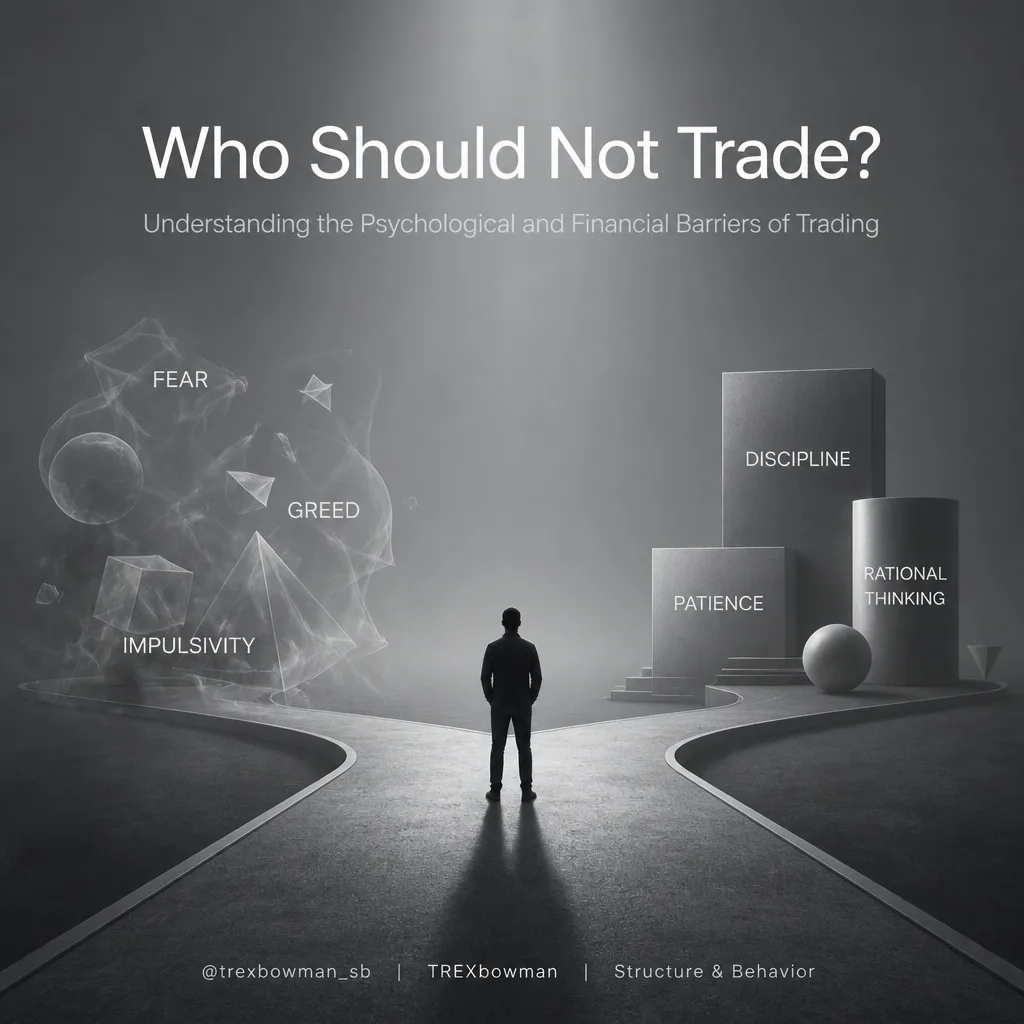
Exploring Trading Psychology and the Factors That Prevent People from Entering the Market
Introduction
Trading is a form of investment that can potentially generate significant returns, but it is not suitable for everyone. Understanding who should not enter this field can help prevent financial losses and psychological stress.
This article examines the various factors that may prevent certain individuals from entering the world of trading and explores the related financial and psychological aspects in detail.
1. Individuals with Low Risk Tolerance
Psychological Aspects
Individuals with a low tolerance for risk often struggle to manage market fluctuations effectively. They may experience anxiety and stress whenever prices decline. People with this characteristic frequently make premature decisions to sell their assets in order to avoid losses; however, this behavior can result in missing valuable opportunities for potential profits.
Financial Aspects
These individuals often make emotional decisions driven by intense fear rather than relying on proper market analysis and logical reasoning. Such behaviors can lead to rapid capital losses and ultimately result in significant financial damage.
2. Individuals Seeking Quick Money-Making Opportunities
Psychological Aspects
The desire to achieve fast income through trading can push individuals toward emotional and impulsive decision-making. These people may be influenced by misleading advertisements and promises of rapid wealth. In such situations, they may take action without considering the necessary analysis and proper evaluation.
Financial Aspects
Individuals who seek quick profits are usually exposed to significant financial losses. This mindset can lead to financial ruin, as they tend to engage in risky and irrational trades instead of following disciplined and structured investment approaches.
3. Individuals with Emotional and Psychological Challenges
Common Conditions and Their Impact on Trading
Individuals dealing with conditions such as depression, anxiety, bipolar disorder, or other anxiety-related disorders may often struggle to make effective decisions under market pressure. These psychological challenges can cause individuals to behave unpredictably in stressful trading situations.
Example
An individual experiencing social anxiety disorder may display impulsive trading behaviors due to fear of failure and concerns about being judged by others.
Financial Aspects
These psychological challenges can lead to inappropriate financial decisions. Individuals facing such difficulties may approach their own analysis with hesitation and lack of confidence, which can result in significant financial losses.
4. Individuals Who Lack Sufficient Knowledge and Expertise
Psychological Aspects
Incorrect conclusions resulting from a lack of sufficient knowledge can lead to feelings of insecurity and a lack of confidence. These individuals often make irrational decisions out of fear of making mistakes and losing money.
Financial Aspects
A lack of awareness regarding analytical tools and trading strategies can often result in poor choices and significant financial losses. Individuals who have not received proper education are more likely to fall into the trap of unnecessary and high-risk trades.
5. Individuals Who Do Not Have Enough Time for Market Analysis and Trading
Psychological Aspects
Trading requires attention, time, and proper analysis of market conditions and economic factors. Individuals with busy lifestyles and demanding schedules may not be able to maintain sufficient focus on the market. This lack of attention can lead to feelings of uncertainty and anxiety.
Financial Aspects
These individuals may make incorrect decisions, resulting in the loss of capital and missed investment opportunities. Trading without proper research and analysis can ultimately lead to significant financial losses.
6. Individuals Facing Financial Difficulties
Psychological Aspects
Individuals who are experiencing financial difficulties naturally face significant psychological pressure. This pressure can lead to emotional and short-term decision-making, which may ultimately worsen their financial situation.
Financial Aspects
Trading with money that you cannot afford to lose is a major risk. This approach can significantly increase the possibility of financial hardship and capital loss, as individuals under financial pressure may make decisions out of desperation and without proper analysis, leading to unfavorable outcomes.
Conclusion
Trading is not limited to having capital or simply having an interest in financial markets. Understanding your psychological, financial, and personal conditions before entering the market is one of the most important factors for success in trading.
Individuals with low risk tolerance, those seeking quick profits, people who lack sufficient knowledge and expertise, those without enough time for proper analysis, or individuals under significant financial pressure should carefully evaluate their circumstances before seriously entering the market.
Trading is a complex and challenging activity that requires knowledge, patience, proper strategies, and emotional control. Entering the market without the necessary preparation can lead not only to financial losses but also to significant psychological pressure.
Successful investing requires continuous learning, risk management, and rational decision-making. Trading should be viewed as a tool for taking advantage of market opportunities, not as a shortcut to quick wealth.
Ultimately, a successful trader is not simply someone who can analyze the market; it is someone who can manage risk, control emotions, and make effective decisions under uncertainty.
@trexbowman_sb | TREXbowman | Structure & Behavior